Steel vs. Wood Raised Garden Beds: A 5-Aspect Comprehensive Comparison to Help You Choose the Best
| Introduction
In the quest for the perfect raised garden bed, the decision between steel and wood often leaves gardeners pondering. Both materials boast dedicated followers and present distinct advantages that cater to different gardening styles, aesthetics, and practical considerations. Whether you’re a first-time gardener or a seasoned horticulturalist, this fundamental choice impacts not just your garden’s appearance, but its longevity, maintenance requirements, and ultimately, your gardening success.
This comprehensive guide will dissect the steel versus wood debate across five critical dimensions, providing you with the clarity needed to make an informed investment in your gardening future.
| Core Aspects Comparison
1. Durability & Lifespan
Steel Beds: Modern high-quality steel beds utilize aluminum-zinc alloy coated steel with exceptional rust and corrosion resistance. Their lifespan typically reaches 15-20 years or more. Steel doesn’t rot, isn’t susceptible to insect damage, and resists warping from moisture, enduring extreme weather conditions effortlessly. Premium coatings further protect against corrosion from soil chemicals.
Wooden Beds: Wood’s longevity depends entirely on species and treatment. Naturally rot-resistant woods like cedar and redwood last 8-15 years; pressure-treated pine survives approximately 5-10 years; while untreated softwoods may deteriorate within 2-4 years. Wood is vulnerable to moisture, soil microorganisms, and insects (particularly termites), easily warping and rotting in damp environments.
The Verdict: For durability and lifespan, steel beds emerge as the clear winner, offering a longer-lasting, more stable gardening solution that reduces replacement frequency and long-term costs.
2. Installation & Maintenance
Steel Beds: Typically feature modular designs with complete accessories, requiring only simple assembly and securing during installation. One person can usually complete setup in 30-60 minutes. Maintenance approaches zero—no staining, sealing, or regular treatments needed, with occasional cleaning sufficing.
Wooden Beds: Installation demands more tools and skills—cutting, drilling, fastening—often requiring two people for 1-2 hours. Maintenance requirements are significant: annual structural inspections, resealing or staining every 2-3 years to prevent rot, and regular pest monitoring.
The Verdict: Gardeners prioritizing quick installation and low maintenance will prefer steel beds, while those enjoying DIY processes and not minding regular upkeep may favor wood.
3. Soil Temperature & Plant Growth
Steel Beds: Metal’s excellent thermal conductivity means steel absorbs solar heat rapidly, raising soil temperature faster in spring and daytime, promoting earlier seed germination and seedling growth. However, in hot summer regions, shading may be necessary to prevent soil overheating. In winter, steel dissipates heat relatively quickly.
Wooden Beds: Wood acts as a natural insulator, maintaining more stable soil temperatures—preventing overheating in summer and providing better insulation in winter. This buffering effect benefits temperature-sensitive crops particularly well, creating a gentler microclimate.
The Verdict: Wooden beds excel in temperature regulation, offering plants a more stable environment, while steel beds provide an “early spring advantage” in cold climates.
4. Environmental Impact & Safety
Steel Beds: Often manufactured from recyclable materials, steel beds are fully recyclable after their long lifespan. High-quality coatings ensure no harmful substances leach into soil, making them completely safe for edible gardens. Their production carries a higher carbon footprint, but extended service life partially offsets this impact.
Wooden Beds: Wood is a renewable, biodegradable resource. Critical caution: pre-2004 pressure-treated wood may contain arsenic and other toxins, unsuitable for edible gardens. Even with safer modern treatments, preservatives may gradually leach into soil. While natural wood is environmentally friendly, deforestation concerns remain relevant.
The Verdict: Untreated natural hardwoods or certified sustainable wood offer optimal eco-friendliness, while high-quality food-grade steel beds provide the best balance of safety and durability.
5. Aesthetics & Design Flexibility
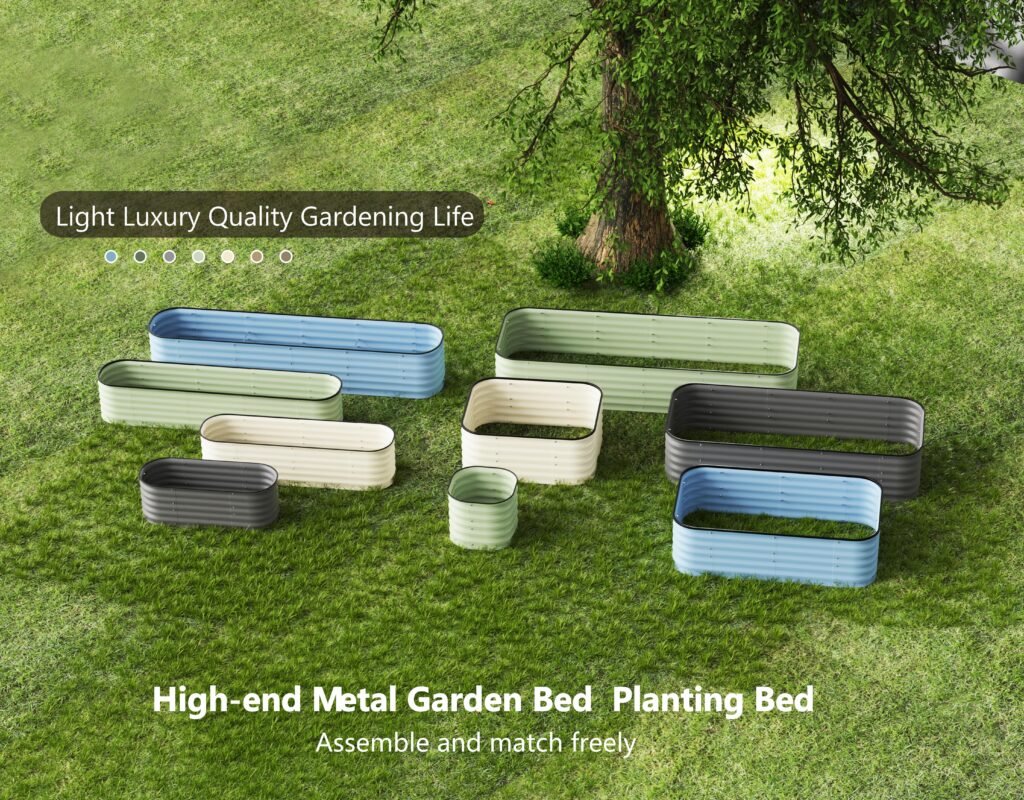
Steel Beds: Offer a modern, minimalist aesthetic with clean lines suited to contemporary garden designs. Available in various colors (black, white, green, brown, etc.), they integrate easily into diverse landscapes. Shapes are generally limited to straight lines and standard curves, with custom irregular designs being costly.
Wooden Beds: Possess timeless, natural rustic charm, developing a graceful patina over time that blends perfectly with garden environments. Wood’s workability allows highly customized designs—circles, tiers, complex geometries—enabling personalized creative expression.
The Verdict: This is the most subjective aspect. Steel suits modern minimalist styles; wood complements traditional natural gardens with greater DIY design potential.
| Decision Guide: Which Is Better For You?
Choose Steel Raised Beds If You:
- Prioritize minimal maintenance and maximum lifespan
- Reside in humid, rainy, or termite-prone regions
- Prefer contemporary minimalist garden aesthetics
- Desire quick installation with limited DIY experience or time
- Grow crops not extremely sensitive to soil temperature fluctuations
Choose Wooden Raised Beds If You:
- Value classic natural appearance and aging patina
- Live in regions with extreme climates (very hot or cold)
- Enjoy DIY projects with basic woodworking skills
- Plan complex shapes or tiered designs
- Can source untreated natural hardwoods and prioritize biodegradability
Hybrid Solutions
Many gardeners opt for combining both materials: using steel beds in main growing areas for durability, and wooden beds in display areas or herb gardens for added warmth and texture.
| Conclusion
Your perfect raised bed exists at the intersection of your practical needs and gardening philosophy. By honestly assessing your climate constraints, time availability for maintenance, aesthetic preferences, and environmental values against the clear contrasts presented here, you can invest in a garden foundation that will support countless growing seasons of satisfaction and abundance.